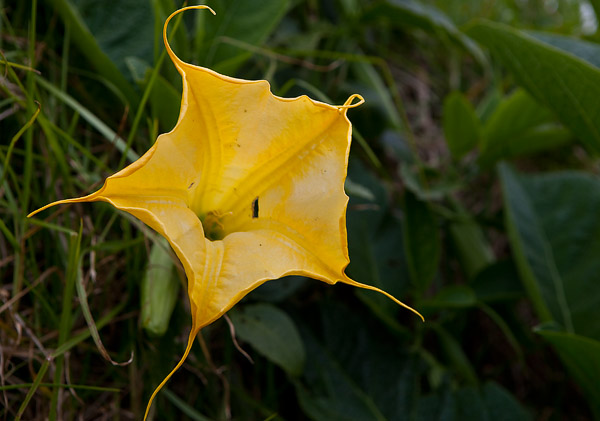
Madeira 2010, day 3, Levada da Janela

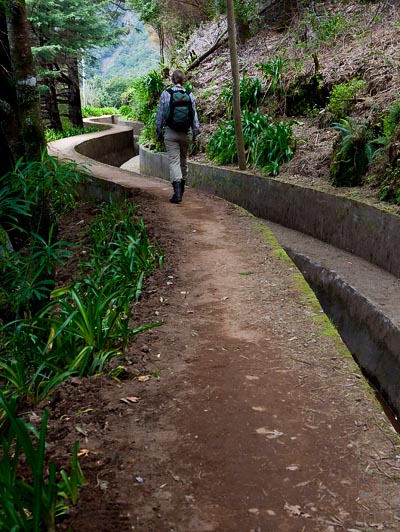
April 12. Levada da Janela is our favourite levada and a must if you happen to be in Porto Moniz. It’s an easy walk, at least at the beginning, and you will be rewarded with breath-taking views all along the way. Ribeira da Janela runs in the bottom of the valley. We made the nice walk twice during this Madeira visit.

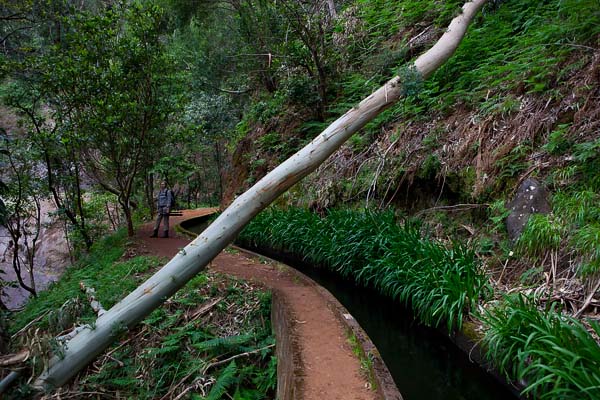
Here too you will see the results from the excessive rain during the spring in the form of landslides and fallen trees. It is not as extensive as on the south side of the island, though. Here a eucalyptus tree has yielded to the loosened soil  and fallen across the levada.
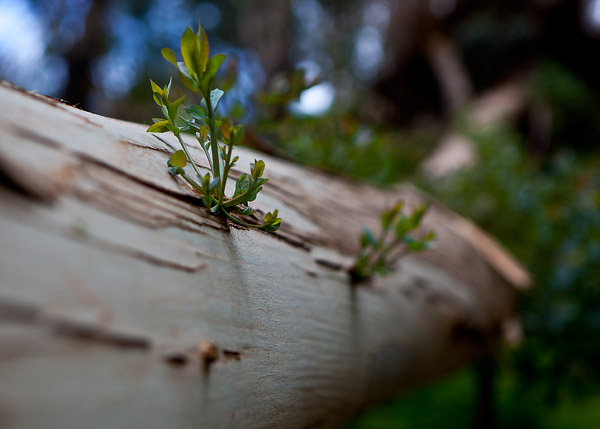
It has not yet given in though. There are fresh sprouts all over the bare trunk.
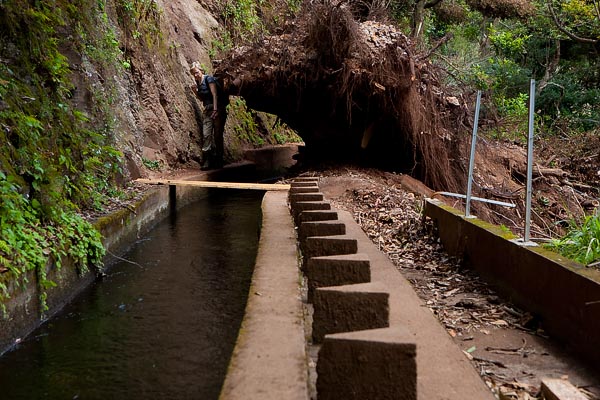
Here a whole root system has  slid down with trees and everything and laid down across the levada. The trees are removed, but the rest seems to be to difficult to get rid of. The section with the triangles in the foreground is a part of the levada wall that is a little lower than the rest. Its purpose is to control where water should overflow in case of flooding. The triangles makes it possible to pass the section when it is flooded.
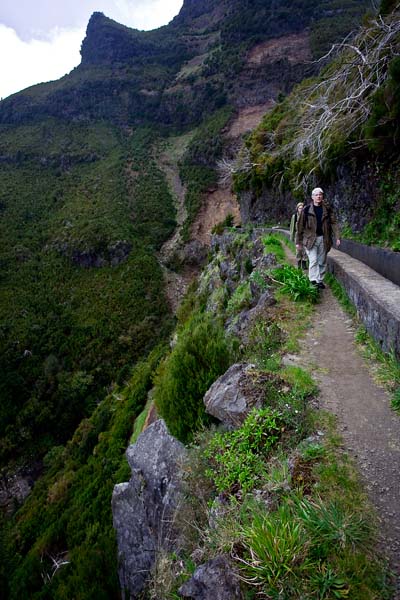
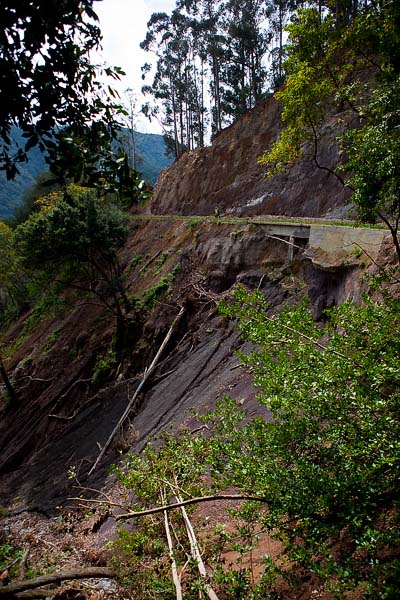
Part of the slope has slid down and the levada has been moved inwards. There is a hiker in the middle of the picture who might give you an idea of the proportions.
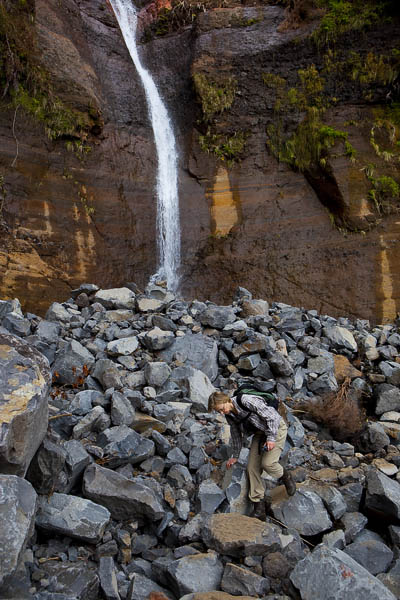
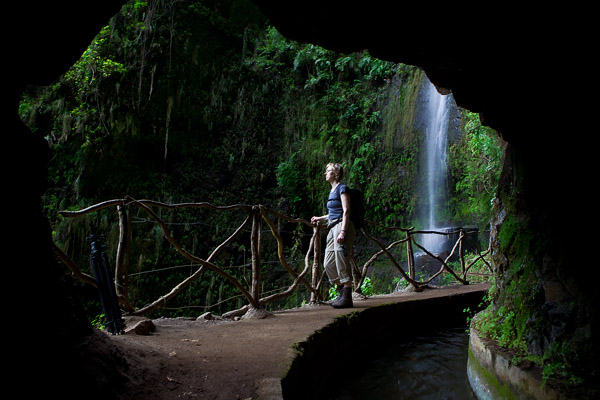
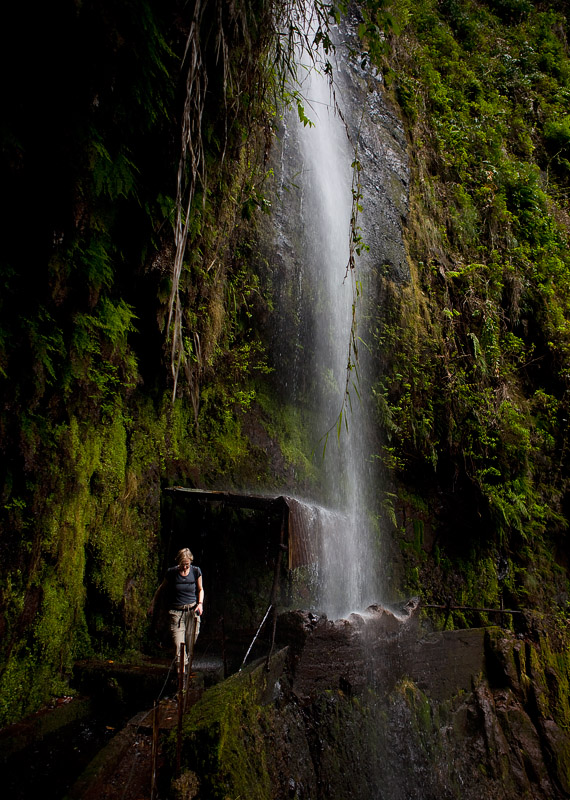
Here we have just passed the first tunnel and ended up in a ravine on the other side with a nice waterfall.
We continue towards the waterfall.
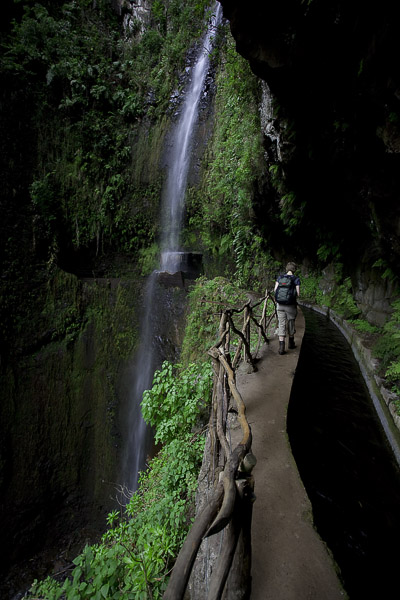
The levadeiros have built a shelter that gives you some protection against the water. We are very greatful for it.
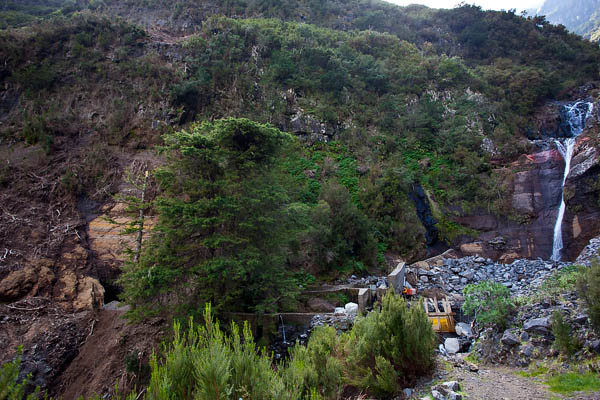
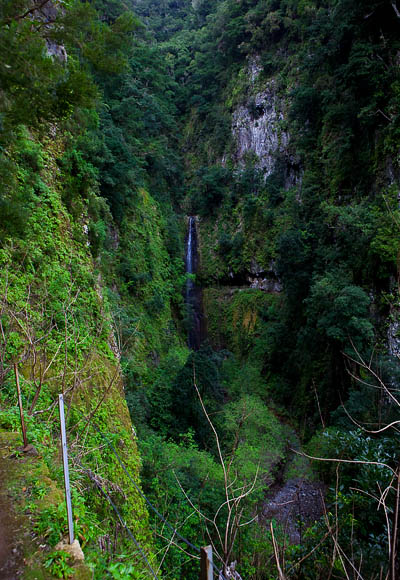
Here you can see the waterfall and the ravine from a distance.
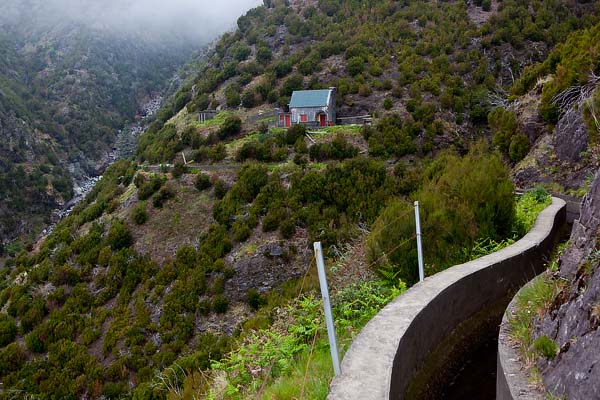
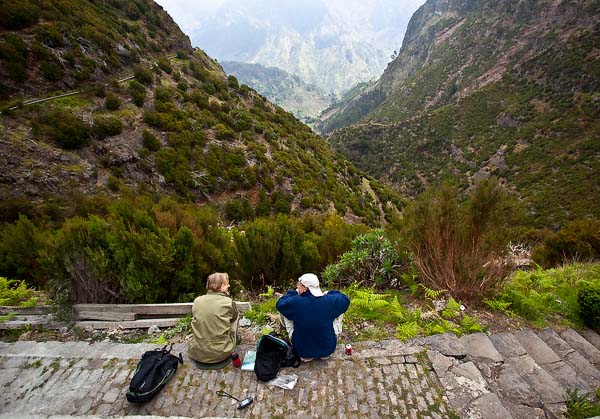
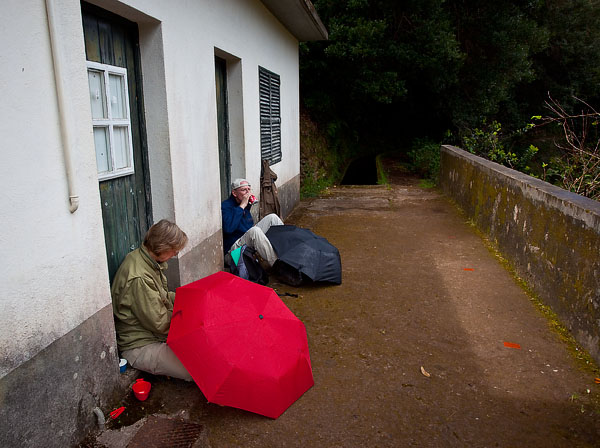
We have reached the levadeiro hut that clings to the mountainside and are occupying the two available seats. A short but heavy shower made us greatful for bringin the umbrellas in our backpacks, but here the sun is shining again. The levada runs under the terrace floor and continues in the dusk in the foliage in the background.
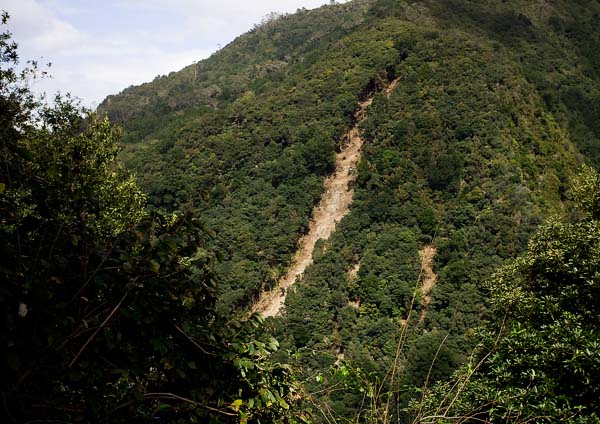
From the terrace we saw the tracks of a landslide. A large piece of land has simply let go and slid down the mountain. It has mown down everything in its way and left a string of bare mountain behind it.
Madeira 2010, day 2, Encumeada and Levada das Rabaçal

April 11. We started today’s levada walk at the Encumeada pass. The first part is a comfortable, wide path.

However, a few hundred meters further on, the path is closed with a sign. There have been quite a few landslides that have destroyed the levada and reconstruction work is going on. But it is Saturday and no Levadeiros are at work, so we decide to take the challange and continue along the Levada das Rabaçal that joins the Levada  Norte which we walked to start with.

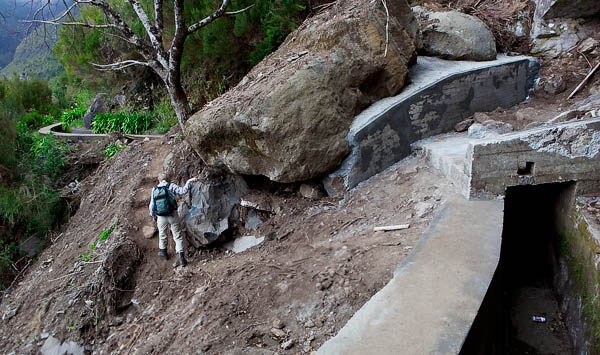
Being hit in the head with a stone of a fotball’s size is probably totally lethal. And yet, it feels like this rock could be even more dangerous. The Levaderio guys have secured the boulder with concrete to stop it from continuing its ravaging tour down to the valley several hundred meters below.

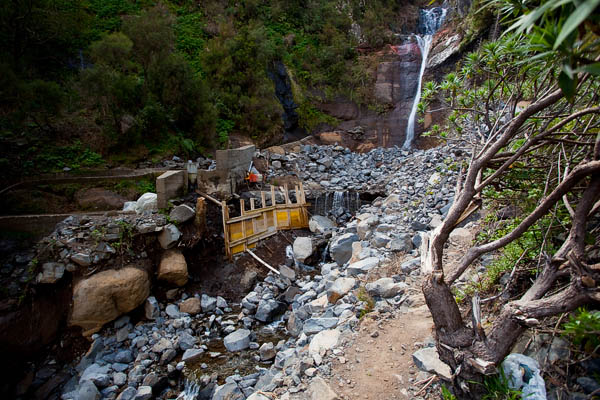
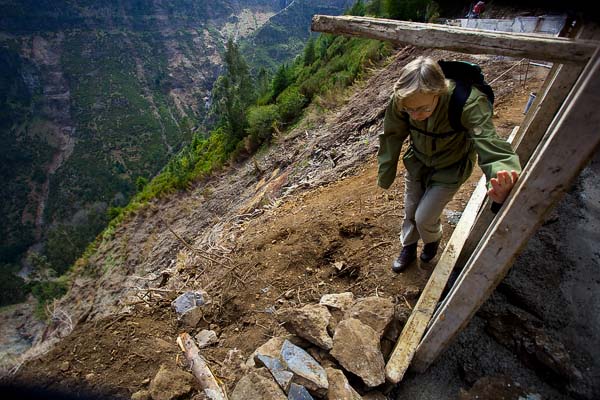
Here the levada is completely demolished by a heavy landslide. The Levadeiros who are reconstructing it have quite a lot of work to do. The wooden construction is a 2.5 meter high mould where they are starting to rebuild the levada section from scratch. The only way to get tools, a cement mixer, a diesel generator and cement here is to use a weelbarrow or just carry it.

Here is a wider view. To the left you can see the entrance to a 300 meter long tunnel that takes the levada here from the other side of the mountain.

With some effort we managed to pass the landslide area.

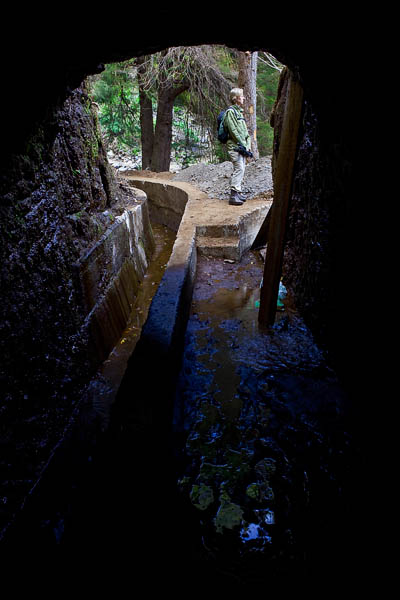
The tunnel from inside. It is often wet in the tunnel, so you need to use suitable shoeware. Keep a cap on to protect your head at least a little from being grazed, the tunnels are often low. And most of all, bring a good torch.

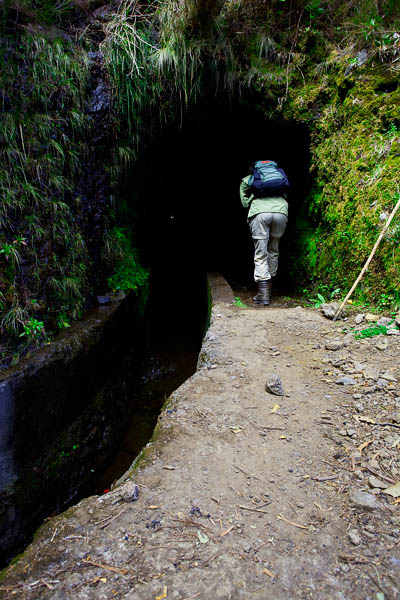
The tunnel from the other side. It is dead straight and if you look closely you can see the other entrance 300 meters away as a small light dot.

One mistake here and it will take a long time before you stop falling.

Eventually we can see our goal, the small Levadeiro cottage.

A well deserved break with a stunning view.

After the meal we turned back since the 2 km long tunnel that comes after the cottage was closed.

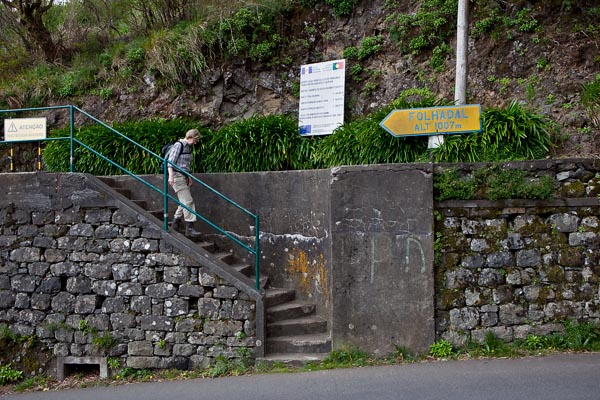
Back at the starting point we take the stairs down from the levada.

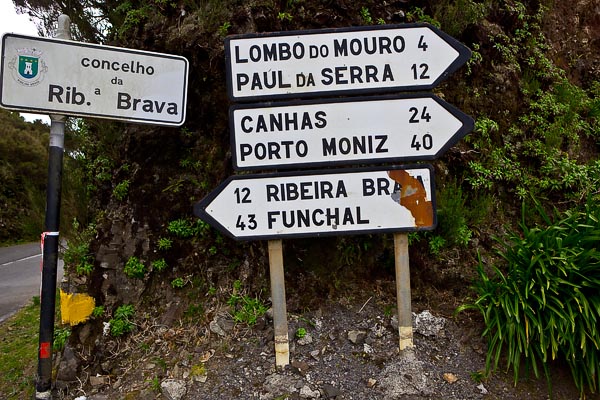
The Madeira roads mostly have good roadsigns to help you reach your goal. This is the crossway at the Encumeada pass. As the crow flies it is 35 km between Porto Moniz and Funchal. If you take the road over the mountains (come to think of it, all Madeira roads go over the mountains) it will be more than twice as long.

Madeira 2010, day 1, a walk in Prazeres

April 10. The first day of this Madeira trip was slightly hazy, but the temperature was nice for a walk around Prazeres, where our favourite hotel is situated. Levada Nova runs through the village and we had time for a few kilometres walk along it. Please bear with the abundance of flower photos, they are unavoidable when visiting a flower island such as Madeira. In posts to come there will be other motifs, stunning views and whatnot.

As matter of curiosity, Prazeres means “pleasures” in English. A search on Google gives you a really varying collection of hits.

A boy needs his stuff…

Levada Nova near Prazeres is not the most spectacular of levadas, but it’s still worth a walk. Wherever you are on Madeira there is something beautiful to watch. Here you can see the levada as a line along the slope, this foggy afternoon. Can you spot Gunilla walking along it?

Prazeres is rather high up and today clouds were low. View from Levada Nova.

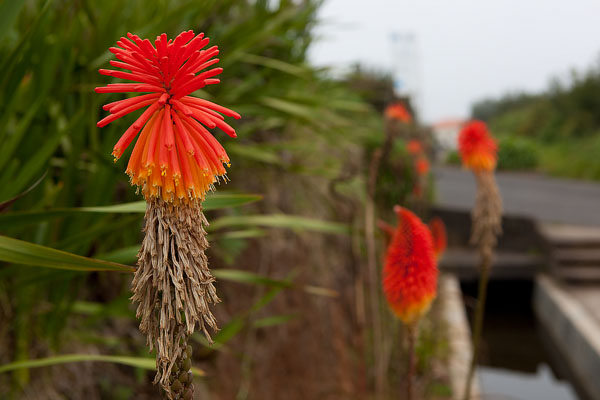
Someone has planted these flowers along the levada. I have know idea what they are called. They are certainly not in my nordic flora. You can see the levada to the right.

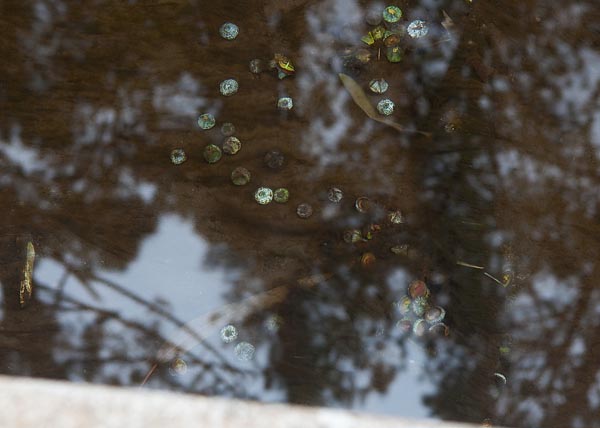
These mysterious objects where at the bottom of the levada. First we thought they were some sort of shells, but they turned out to be the fruits of eucalyptus trees that grow further away.

Eucalyptus trees are a rather common sight on Madeira. There is a great concern for the environment on Madeira nowadays, but there are large deforested areas from earlier days. To bind the earth in these areas, eucalyptus trees were planted. Unfortunately, these trees need a lot of water and they don’t leave much nutrition left for anything else where they grow. Another problem is that they burn very easily. On both our previous journeys to Madeira we have seen forest fires raging up in the mountains. The eucalyptus trees are slowly being replaced with other vegetation, and deforested areas are being reforested. On our first trip here we participated in a planting day on the barren mountain plateau Paúl da Serra, arranged by our hotel. Both guests and hotel personnel participated, wielding pickaxes to make holes in the stony ground for fresh plants of all kinds (but no eucalyptus), and later to go to an old farmhouse to eat espetadas grilled over open fire. (Espetadas are pieces of meat on laurel sticks, which gives them a superb taste.) On the picture is an area with eucalyptus trees along Levada Nova.

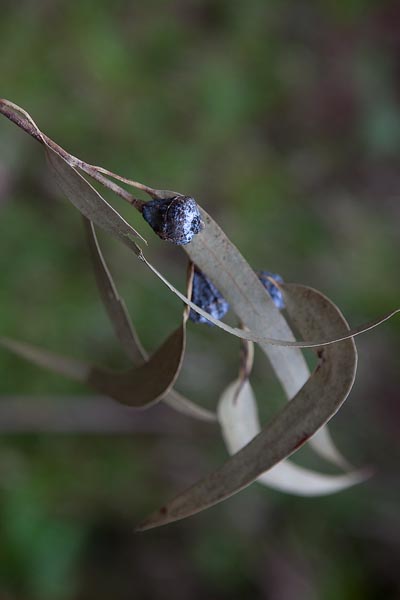
Dried eucalyptus twig with those odd fruits.

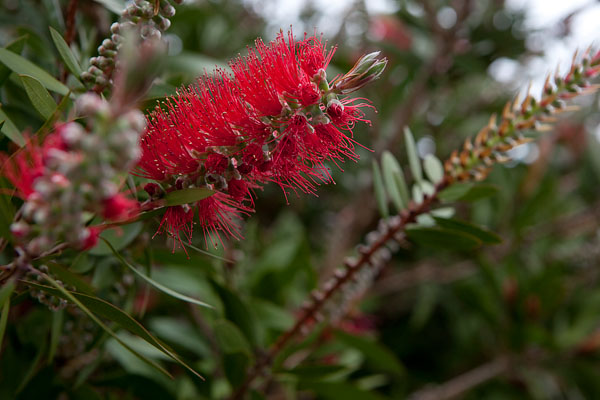
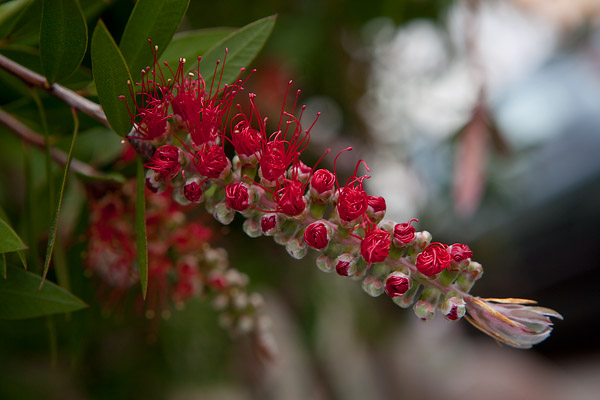
There is a lot to see inside Prazeres as well. Here is a bush that is popular in parks: The bottle brush flower.

Here it is bristling up.

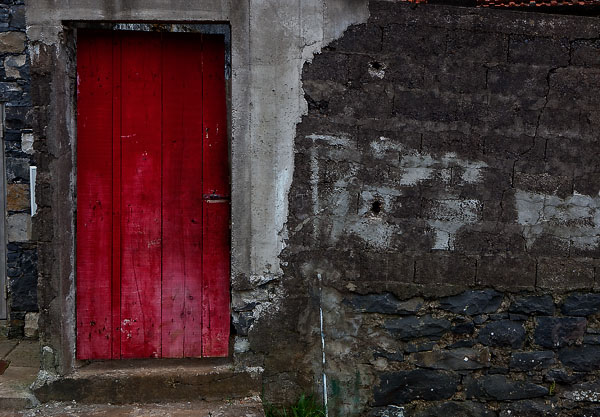
Red door in the wall.

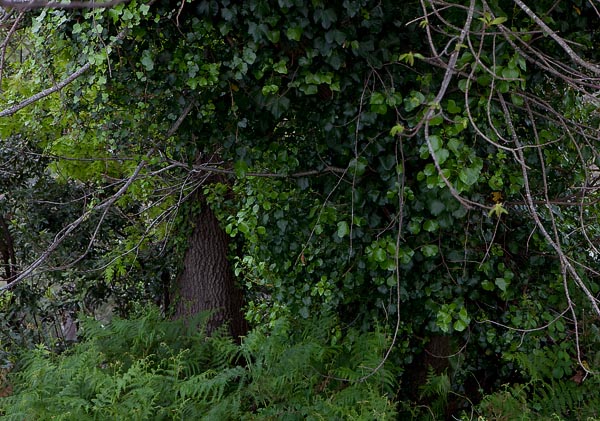
Somewhere in this mass of ivy and other creeper plants an oak tree is hiding…

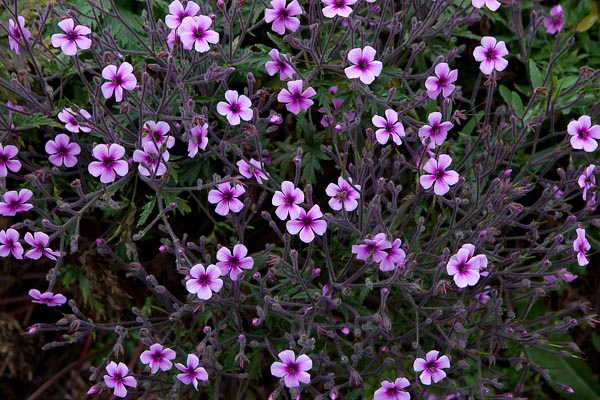
Nice flowers. Does anyone know what they are?

Garden plants make it very well in the wild on Madeira. Here is a pumpkin growing along the road.

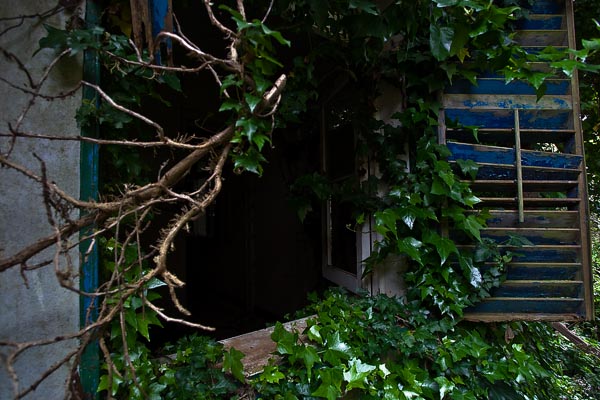
Near the end of our Prazeres walk we found an abandoned garden with an abandoned house, both of which were completely covered with ivy. The ivy was everwhere and the dusk inside the garden gave us a hint of what the hundred year old garden of the Sleeping Beauty could have looked like – provided the beauty herself had come from a somewhat lower social strata. I’m going to get me some cool pictures, I said, and set up the tripod to start shooting. That’s when Gunilla discovered that the garden was a hugely popular refuge for people in certain dire need. Once this fact was disclosed, the tripod was hastily folded together and we set off for the hotel to perform sandal maintenance.